By Anthony Eaton
Kick It at Kellogg Mall Park This Summer!
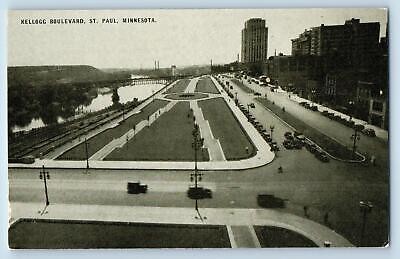
That was the title of the city’s recent email promoting summer events at Kellogg Mall Park in downtown Saint Paul. I couldn’t help but find it ironic, having just been there that morning with a cup of coffee, searching for a clean spot to sit, somewhere not surrounded by garbage, broken glass, or discarded drug paraphernalia.
I wonder how we let one of our city’s most visible public spaces become a trash can.
Located along Kellogg Boulevard in downtown Saint Paul, the park spans approximately 4.2 acres atop the Mississippi River bluff. Established in 1931, the park was part of a city initiative to create a scenic promenade offering panoramic river views.
The park’s name honors Frank B. Kellogg, a prominent Saint Paul resident who served as U.S. Secretary of State and co-authored the Kellogg-Briand Pact, an international agreement aimed at preventing war.
I understand that many cities like Saint Paul are grappling with serious social challenges, including homelessness, drug addiction, mental health crises, and a lack of adequate support systems. I firmly believe in community-building, the arts, and activities that bring people into shared public spaces. But before we can ask people to “kick it” in Kellogg Park, shouldn’t we make it a place they want to be?
Kellogg Mall Park has long been treated like the forgotten stepchild of downtown parks. In the 1980s, Kellogg Mall Park underwent significant renovations to revitalize its landscape and historical significance. Artist Cliff Garten collaborated with city landscape architects to redesign the park, incorporating features such as an arcing pergola, fountains, and sculptures that reflect the city’s heritage. Unfortunately, it again is falling into disrepair despite a complete redesign and upgrade in the 1980s. Being one of the largest parks downtown, it has so much potential with its fountains and green space. Compared to the attention given to Rice Park and Mears Park, Kellogg feels like an afterthought. Seeing the decay today is not just disappointing; it’s disheartening.
In the short time, I was in the park, I noticed some issues: there were no visible garbage cans, there was nowhere to lock a bike, some benches and other surfaces were covered in graffiti, vandalism is unrepaired, and the landscaping is unkempt. Worse still, open drug use, public intoxication, and panhandling go unchecked. There is also the problem of people urinating in public because public restrooms are nonexistent or locked.
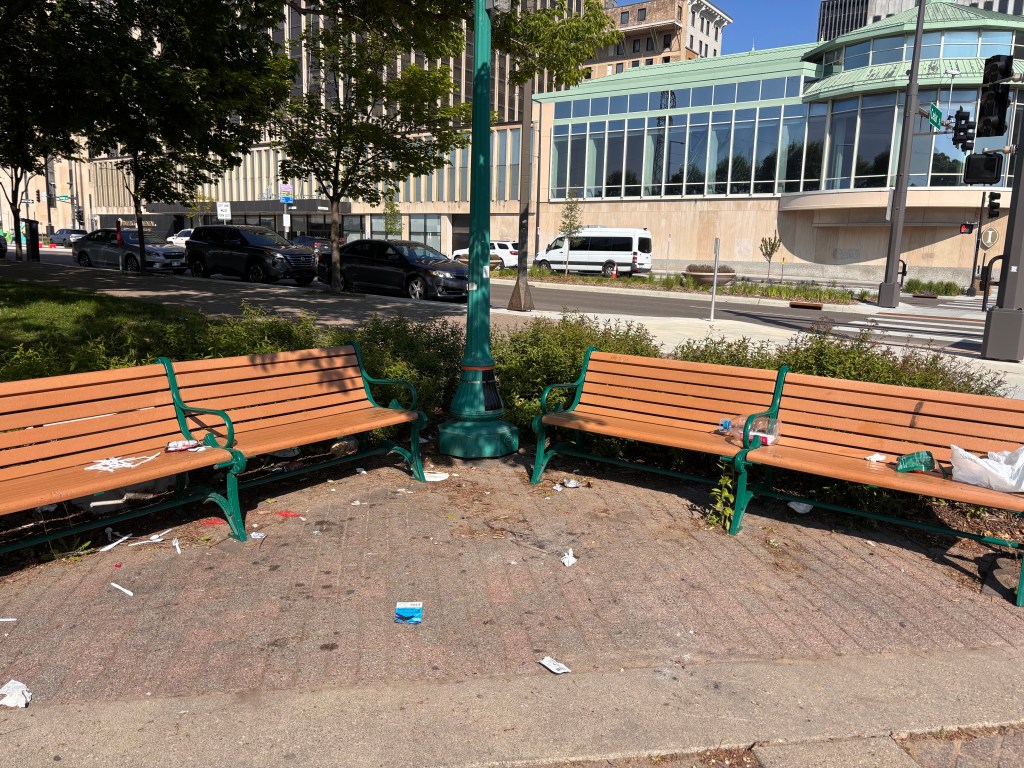
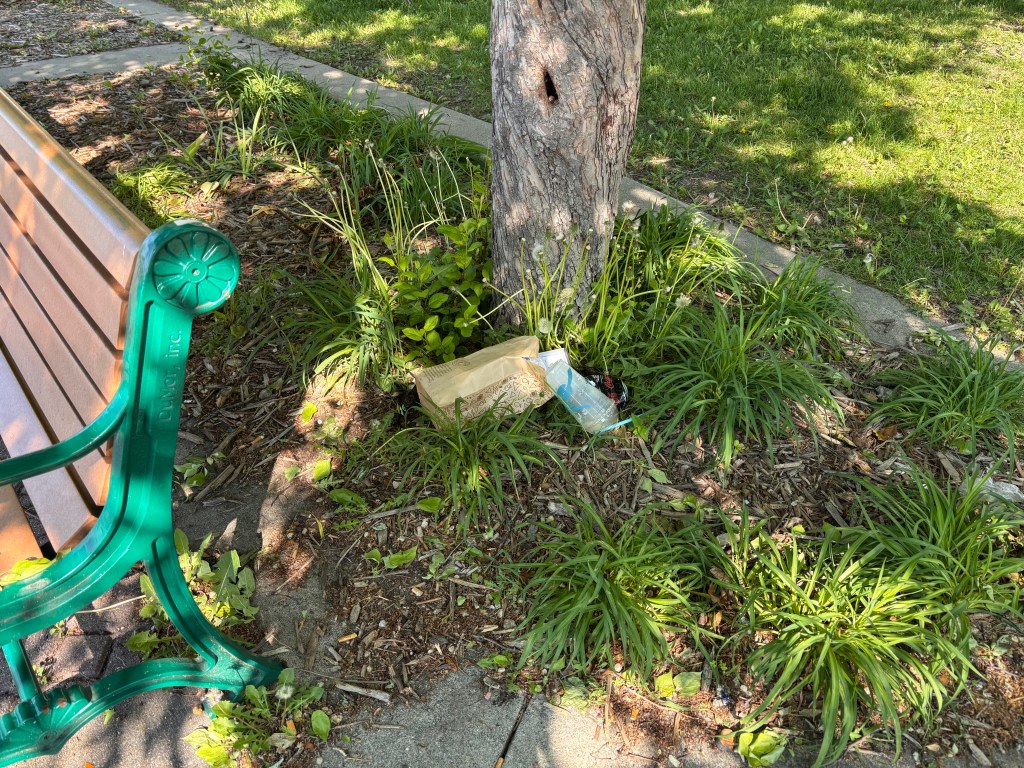
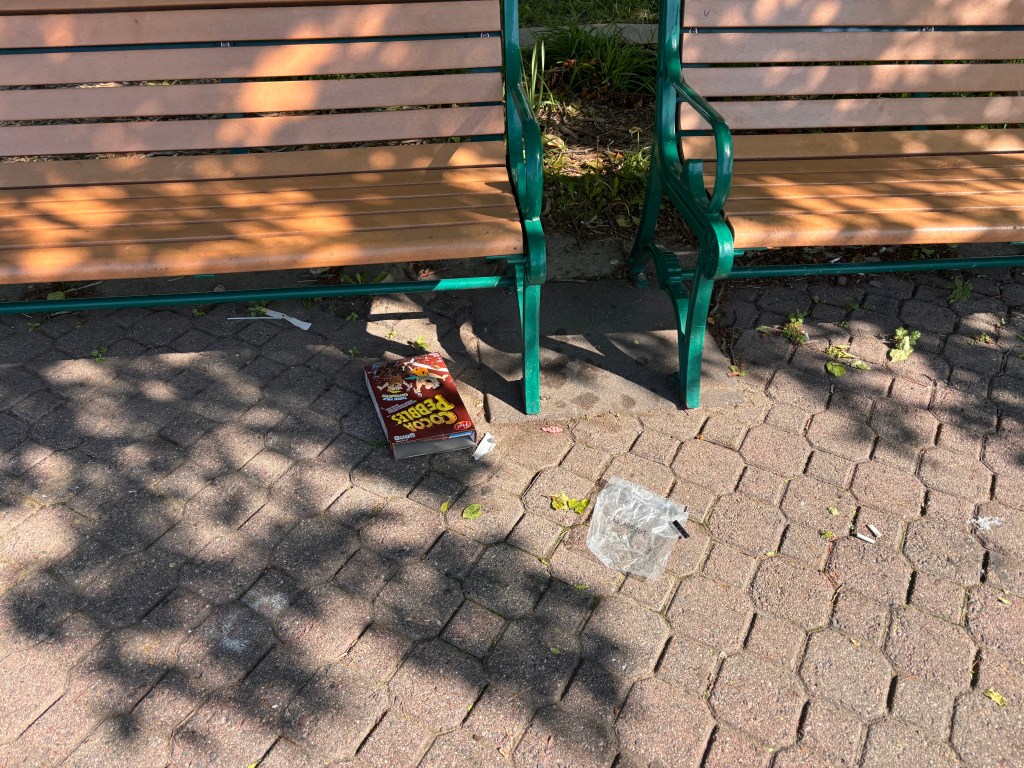
As a child, I remember Kellogg’s as a bleak, nearly treeless stretch of concrete with little shade and even fewer reasons to linger. When the city revitalized the park decades ago, it created something beautiful. But it seems to have turned its back, and now that beauty is being swallowed by neglect.
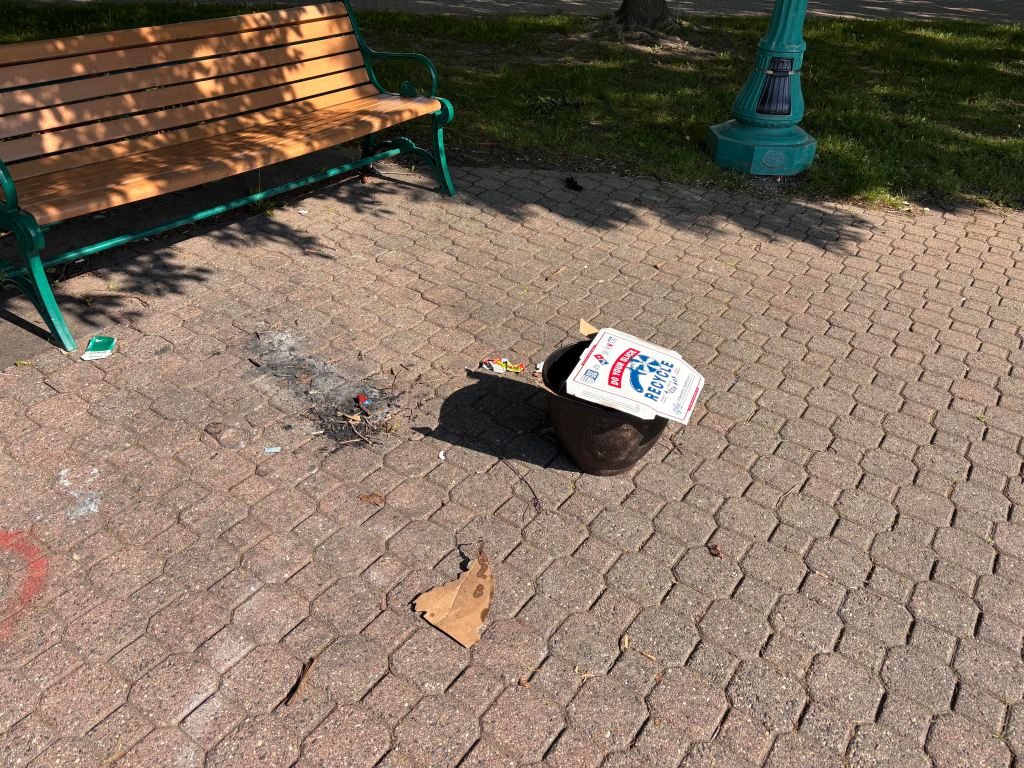
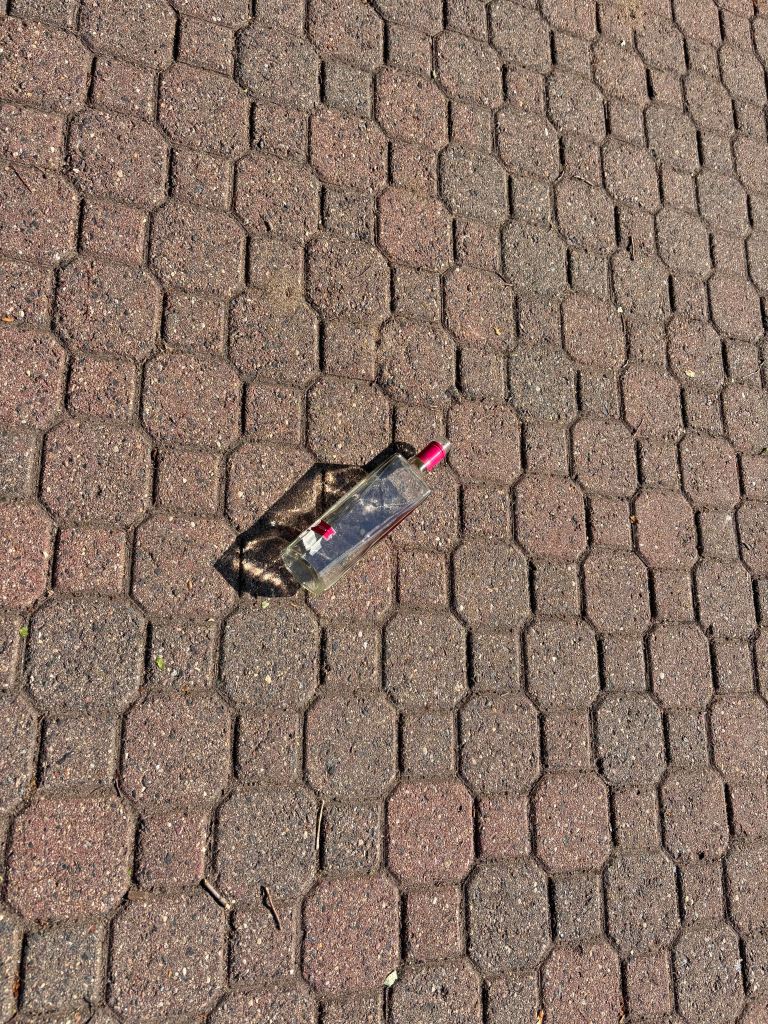
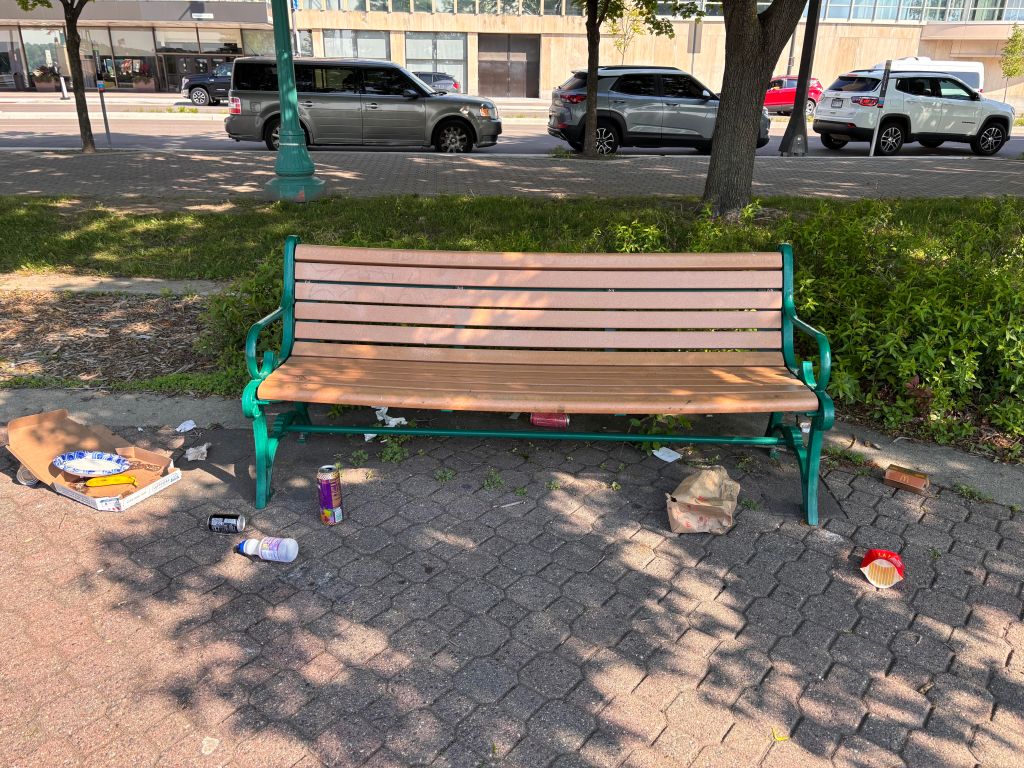
We say we want people to use our parks—but where is the investment in keeping them clean, welcoming, and safe?
The solutions aren’t complicated, and they aren’t even new. Other parks have implemented them with success. Mears Park thrives because of strong community engagement, visible upkeep, and active programming. Rice Park benefits from consistent attention, security, and civic pride.
Here’s what would help:
- Install visible, emptied garbage cans.
- Add bike racks and seating in shaded areas.
- Enforce existing laws on open drug and alcohol use.
- Increase police presence after dark.
- Close the park overnight—say, from 10 p.m. to 6 a.m.
- Engage nearby businesses and residents in stewardship.
- Share the history of the park to foster pride and ownership.
At the very least, we must expect the city to maintain what it already has before building anything new. Right now, we are planning and funding new green spaces but failing to care for existing ones.
Parks should be places of refuge, reflection, and community, not reminders of a city that has given up on itself.
Kellogg Mall Park can be a jewel again—but only if we demand better.
 Espresso Talks
Leave a comment