By Anthony T. Eaton
Crumbling sidewalks, mismatched bricks, and a disappearing tree canopy—what’s going on with Saint Peter Street? Once a charming and walkable corridor in downtown Saint Paul, the stretch between Fourth and Fifth Streets now feels like a case study in neglect and short-term thinking.
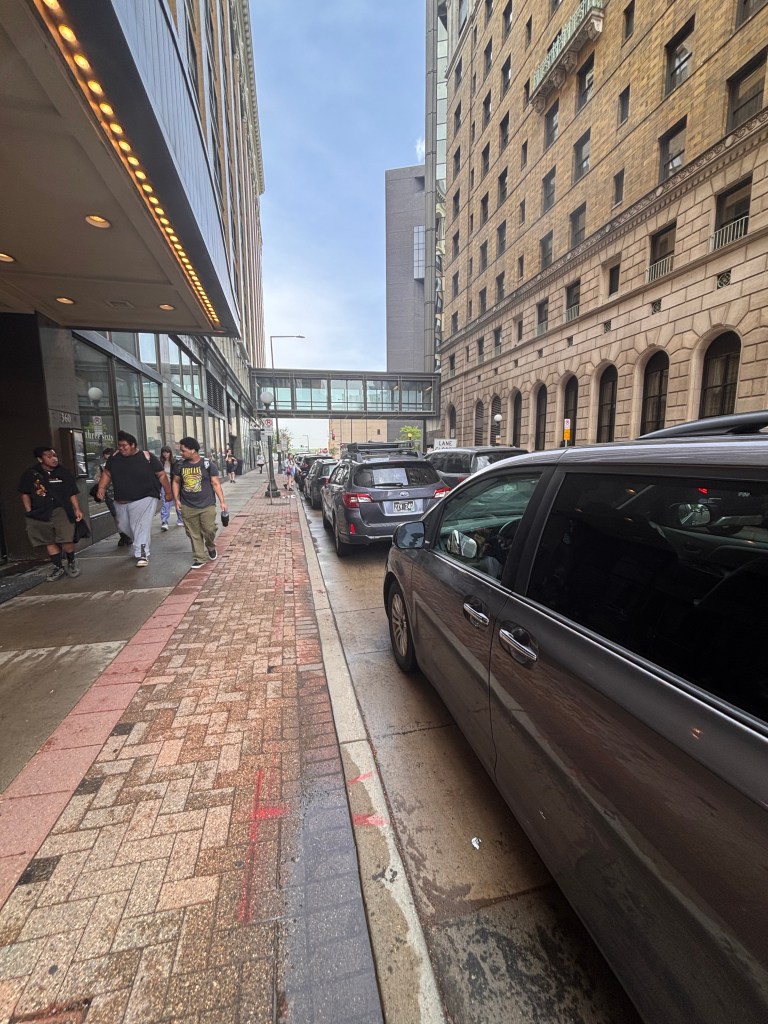


Yes, there have been some improvements. ADA-compliant curb ramps have been installed at Saint Peter and Fourth, and the apron in front of the Hotel Saint Paul was recently rebricked. But step across the street, and the conditions shift sharply. In front of The Lowry building, the sidewalk is deteriorating—uneven, cracked, patched with mismatched materials, and downright unsafe in places.
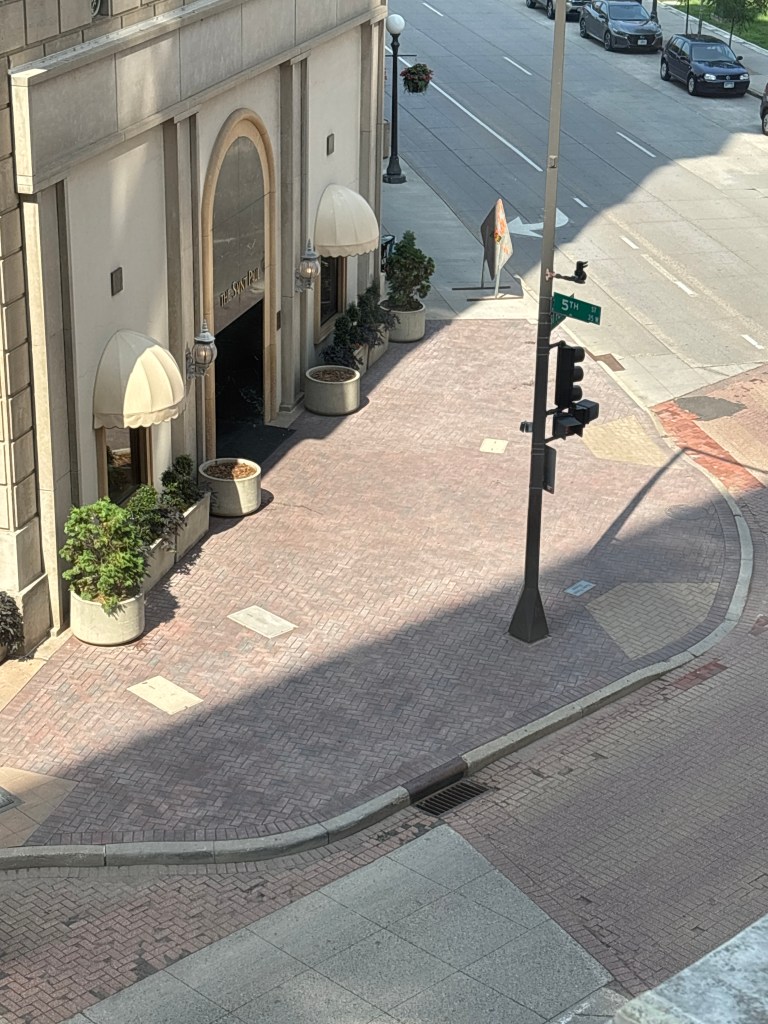
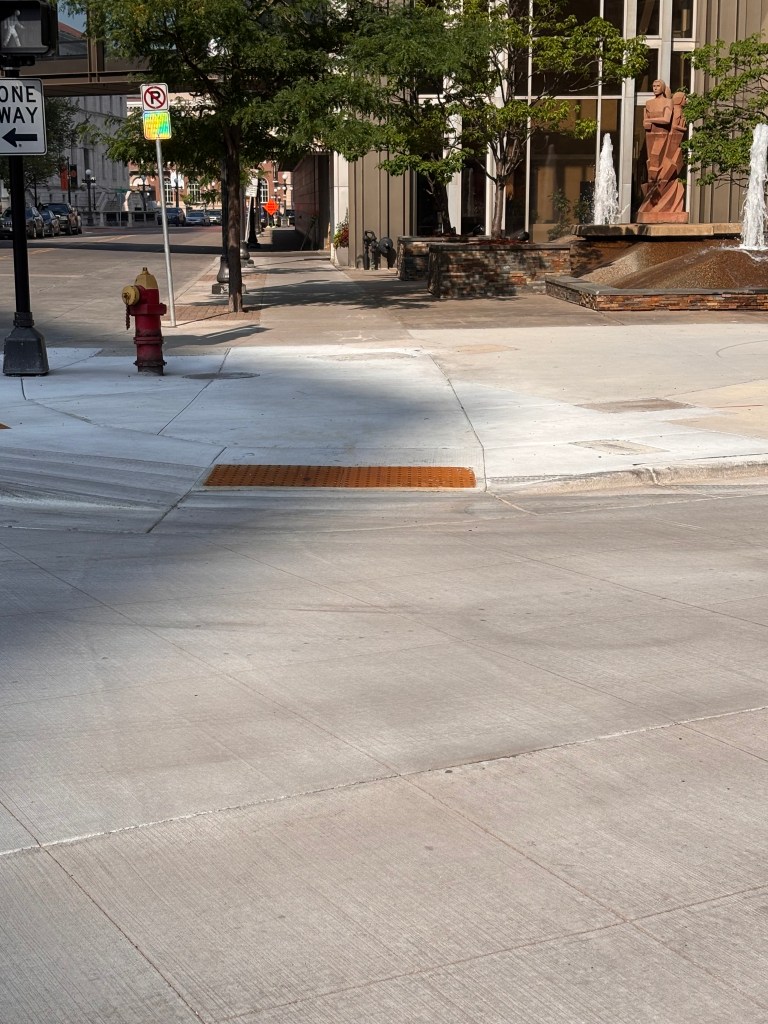
The root of the problem is deeper than aesthetics, it’s an engineering issue. When the pavers were first installed, the incorrect type of brick was used. Likely selected for cost or appearance rather than performance, these bricks were not designed for the punishing freeze–thaw cycles of Minnesota winters or the heavy use that downtown sidewalks endure. The result? Bricks that are crumbling underfoot, shifting with the seasons, and popping loose under snowplow blades.
Not All Brick Pavers Are Created Equal. There are three main types of pavers used in city environments:
Clay Brick Pavers – Durable, colorfast, and long-lasting. Ideal for historic or high-use areas.
Concrete Pavers – Affordable and widely available, but prone to fading and surface wear, especially under salt and snowplows.
Permeable Pavers – Designed for stormwater management, available in both clay and concrete varieties.
But for commercial and municipal sidewalks like Saint Peter Street, durability is everything. Pavers need to handle high foot traffic, delivery trucks, winter plowing, and constant freeze–thaw stress.
Unfortunately, what was initially installed on Saint Peter Street was not up to this standard—and the repairs haven’t been much better. Oh, and why were the brass looking street signs embedded in the corners not replaced?
It’s not just the bricks that are falling apart. The urban trees that once lined Saint Peter have been cut down in many areas, and although a few replacements have been planted, the effort has been inconsistent and, frankly, ineffective.

Why? Because planting a tree in a 2×2-foot sidewalk cutout surrounded by concrete is setting it up to fail. Trees in urban settings need between 30 and 1,000 cubic feet of healthy soil—not just for water and nutrients, but to allow their roots to grow and stabilize. Without it, roots become girdled or stunted, leading to poor health, early decline, and eventual death.
Compacting the problem is the urban heat island effect, where pavement radiates heat and dries out shallow soils. Combined with limited rain infiltration—because impervious surfaces like asphalt don’t allow water to soak in—these shallow pits dry out quickly. Especially in droughts or heatwaves, young trees have almost no chance.
The result? More taxpayer dollars are spent on planting trees that die before they can provide any of the long-term benefits we need—such as shade, stormwater absorption, improved air quality, and visual appeal.
Meanwhile, the City Continues to Spend Elsewhere. In 2018, Saint Paul approved $500,000 annually for bikeway infrastructure through the Capital City Bikeway. The 2025 city budget allocates an additional $150,000 for “next best” bike safety projects aligned with the 2024 Bike Plan. These are essential investments—but they only deepen the question:
Why do we keep adding more and more at the taxpayers’ expense when we can’t maintain what we already have?
Take the city’s recent request for $394.6 million in state funding to help renovate the Xcel Energy Center Arena Complex, part of a $769 million project that would also involve local contributions of over $158.8 million. Meanwhile, Saint Peter Street—just steps from key downtown businesses—is falling apart.
According to the city’s 5-Year Capital Improvement Program, Saint Peter Street is listed as a “Known Future Project” with construction targeted for 2029. It’s not yet in design or public engagement. So residents and businesses are expected to wait at least four more years?
Even worse, these long delays are occurring in a fragile financial environment. The state of Minnesota is projected to face a $6 billion structural deficit by fiscal years 2028–29—$800–850 million higher than earlier forecasts, according to Axios, AP News, and the Minnesota House. The effects are already being felt—layoffs at the Science Museum. Federal agencies are closing offices in Saint Paul. Eventually, these cuts will also affect the city level.
We are spending like there’s no tomorrow, while the bricks under our feet crumble today.
Saint Peter Street is a microcosm of a larger failure: a city that prioritizes expansion over upkeep, flashy announcements over daily livability.
But we can change course.
Choose materials that last and design planting spaces that allow trees to thrive. Invest in existing streetscapes—not just new ones and maintain what we’ve built before asking taxpayers to fund more.
In a downtown struggling to attract and retain residents, visitors, and businesses, walkability, greenery, and basic infrastructure are key to economic development.
So again, what is the plan? All we hear about are the big, flashy, and expensive new projects, but we rarely discuss what we already have.
Saint Paul and Saint Peter Streets deserve better.
 Espresso Talks
Leave a comment