By Anthony T. Eaton
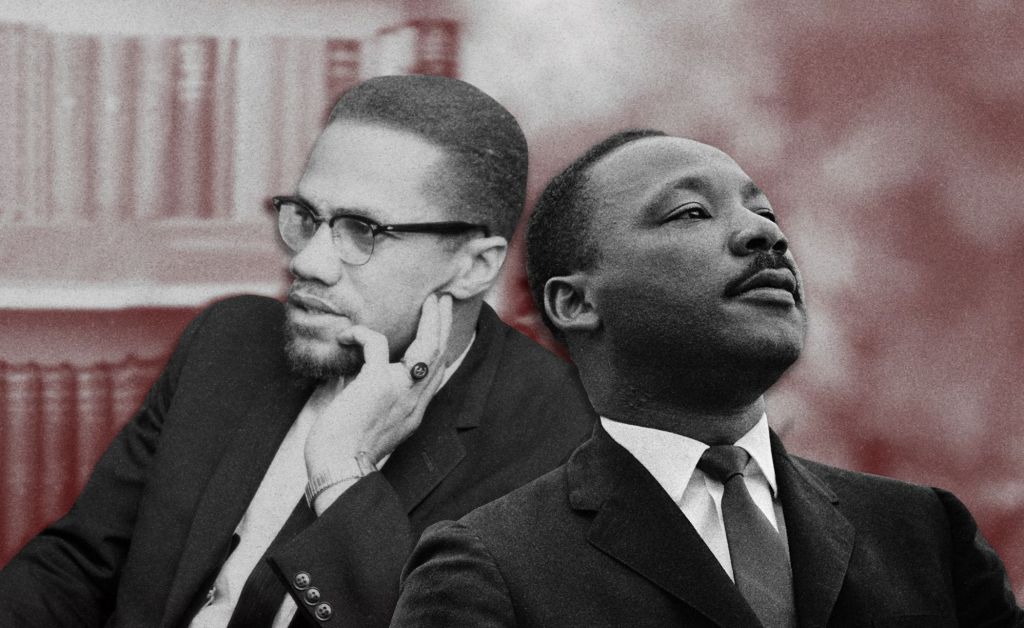
The civil rights movement was not a singularly focused struggle but a collection of voices, philosophies, and strategies demanding equality for Black Americans. Martin Luther King Jr. and Malcolm X were two of its most iconic figures.
The two of them embodied seemingly opposing approaches to achieving racial justice. Despite these stark differences in approach, both leaders were correct, speaking to different aspects of the Black experience and the fight for equality.
Martin Luther King Jr. believed in nonviolent resistance as the most effective means to achieve racial equality. King urged Black Americans to challenge systematic racism through peaceful protests, boycotts, and the courts. Inspired by Mahatma Gandhi, he preached peaceful civil disobedience.
His vision of an America where people of all races could coexist in harmony painted a hopeful picture, but he was also not blind to the challenges and dangers that lay ahead.
King’s approach galvanized national support through peaceful resistance. By exposing segregationists’ brutality, he gained the sympathy of white moderates. This approach helped lead to landmark legislation such as the Civil Rights Act of 1964 and the Voting Rights Act of 1965.
Malcolm X, on the other hand, took a different approach. He rejected the idea of integration and advocated for Black empowerment, self-sufficiency, and, if necessary, self-defense. Malcom viewed King’s nonviolent approach as an unrealistic response to what Black people endured. His philosophy was that Black Americans should reclaim their dignity and power on their terms rather than seek validation from the white establishment.
His phrase “by any means necessary” resonated with those who had grown disillusioned with the movement’s slow progress. This also aligned with his belief that equality could not always be achieved with patience and passive resistance.
Despite their ideological differences, both were responding to the same reality that America was and is a profoundly racist society. King had an innate ability to mobilize mass movements and appeal to young white Americans, which likely led to tangible legislative victories.
Malcolm voiced the rage and frustration of those who had lost faith in nonviolent resistance. His message empowered the Black community to refuse to be passive victims and embrace self-respect and economic independence. He exposed the hypocrisy of a nation that preached democracy while denying it to millions of its citizens.
Both approaches were necessary. While their contrasting strategies may appear contradictory, they were not; in reality, they were complementary forces. Without King’s nonviolent protests, there may have been no legal victories for civil rights. Without Malcolm’s radical challenge to the status quo, the urgency of the movement may have been lost.
Both sought the same destination: a world where Black Americans could live equally.
The struggle for justice is not a relic of the past; it is as relevant today as it was then. With increasing threats to democracy, voter suppression, and efforts to roll back the gains of the civil rights, women’s rights, and LGBTQ rights movements, their dual approach remains necessary.
Peaceful protest and legal action are crucial in defending the hard-won victories of the past. Grassroots activism, mass mobilization, and civic engagement are still powerful tools for change. At the same time, insistence on self-determination, empowerment, and resistance against oppression is equally essential.
The fight for equality must include the moral appeal of justice and the unyielding demand for power and self-determination. The path forward requires a combination of persistent, peaceful resistance and a fierce refusal to accept oppression in any form.
The actions of today must be rooted in the lessons of the past. The efforts to dismantle democracy and strip away hard-won rights are not abstract; they are happening now, in front of us.
We must look to these leaders and others as examples of what we must do now. Their strategies worked then, and they will work now—but only if we refuse to back down. Small efforts matter, and each person has a role to play, whether through activism, education, voting, or community organizing. As Margaret Mead famously said, “Never doubt that a small group of thoughtful, committed citizens can change the world; indeed, it’s the only thing that ever has.”
The fight for justice is not a few’s responsibility but all’s duty. The road ahead will not be easy, but history has shown us that change is possible when people stand together and take action. The time to fight is now.


Leave a Reply